The top 10 AI digital marketers in India are changing how businesses grow online. They do not just use AI tools — they use them with strategy, creativity, and deep customer understanding. In this article, you will get the best advice directly from these experts. From building smarter content systems to running data-driven campaigns, their lessons apply to every business size and industry. Whether you are a beginner or an experienced marketer, what you read here will shift how you think about AI and digital marketing forever.
Contents
- 1 Why Top 10 AI Digital Marketers in India Think Differently
- 2 1. Suman Sao — “AI Amplifies Your Thinking. It Doesn’t Replace It.”
- 3 2. Karthikeyan Maruthai — “Data Is the Language AI Speaks. Learn to Speak It Too.”
- 4 3. Deepali Purohit — “Your Brand Voice Is Your Biggest Asset. Protect It.”
- 5 4. Aayush Bhaskar — “Speed Is Nothing Without Direction. AI Gives You Both.”
- 6 5. Shweta Bajaj — “AI Marketing Without Empathy Is Just Noise.”
- 7 6. Pranjal Pandey — “Content Is King. Context Is God.”
- 8 7. Richy Roy — “The Best AI Strategy Is One That Makes You Irreplaceable.”
- 9 8. Sorav Jain — “Community Is the Moat AI Cannot Build for You.”
- 10 9. Sahil Khan (Digital Marketing) — “Your Personal Brand Is Your Best SEO Strategy.”
- 11 10. Neil Patel (India-Facing Insights) — “AI Changes Tactics. Fundamentals Never Change.”
- 12 Key Themes: What All Top AI Marketers in India Agree On
- 13 How to Apply This Advice Starting Today
- 14 The Future of AI Digital Marketing in India
- 15 FAQs: People Also Ask
Why Top 10 AI Digital Marketers in India Think Differently
India has become one of the fastest-growing digital marketing ecosystems in the world. With over 900 million internet users and a booming startup culture, the demand for smart, AI-driven marketing has never been higher.
But here is the thing — most people are using AI the wrong way. They dump a prompt into ChatGPT, copy the output, and call it marketing. That does not work.
The marketers who are winning? They combine real business thinking with AI tools. They understand the customer deeply. They test constantly. And they build systems, not just campaigns.
In this article, we bring you the best advice from India’s top 10 AI digital marketers. These are people who have built brands, trained thousands of students, and used AI to generate real results — not just impressive demo videos.
Read carefully. There is something here for everyone.
1. Suman Sao — “AI Amplifies Your Thinking. It Doesn’t Replace It.”
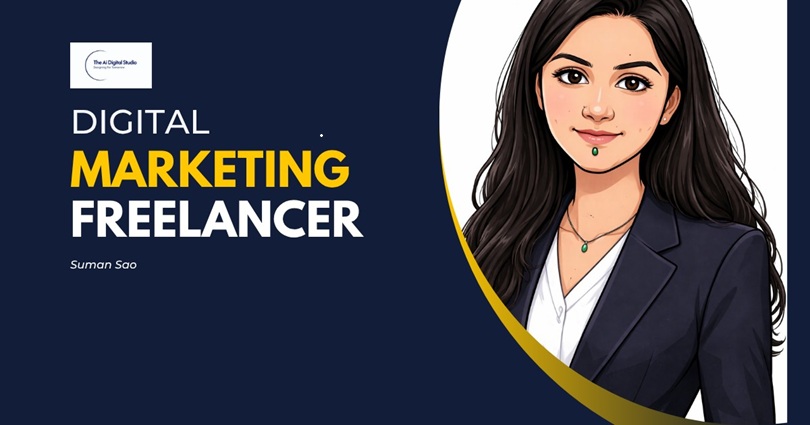
Suman Sao is widely recognized as one of India’s most forward-thinking AI digital marketers. He has built a reputation for breaking down complex AI strategies into simple, actionable steps that real businesses can use. His work focuses on helping entrepreneurs and marketers use AI not just to automate tasks, but to think better and create faster.
Suman’s approach is different from most. He does not just teach tools. He teaches thinking frameworks. His students and followers report that the biggest shift they experience is not learning a new software — it is learning how to ask better questions.
His Core Advice
Suman Sao’s number one piece of advice is this: AI is an amplifier, not a replacement.
Most people come to AI hoping it will do their work for them. Suman flips that idea. He teaches that AI is only as good as the intelligence and intent you bring to it. If you think poorly, AI gives you poor results faster. If you think clearly, AI becomes a superpower.
Here is how he breaks it down:
Understand Your Customer First, Always
Before you open any AI tool, Suman says you need to know three things about your customer: What keeps them awake at night? What do they want more than anything? What has stopped them from getting it so far?
Once you can answer those three questions clearly, AI becomes 10 times more powerful. Why? Because now your prompts are specific. Your content is targeted. Your ads speak directly to real pain points.
“Vague input, vague output,” Suman often says. Marketers who skip this step waste hours generating content that does not convert.
Build a Personal AI Marketing Stack
Suman recommends every marketer build what he calls a “personal AI marketing stack.” This is a set of AI tools — carefully chosen and connected — that handles different parts of your workflow.
For example:
- Use one tool for research and ideation
- Use another for writing and editing
- Use a third for design and visuals
- Use analytics tools to measure everything
The mistake most beginners make, he explains, is jumping between tools without a system. You end up wasting time and getting inconsistent results. A defined stack gives you speed and consistency.
The 70/30 Rule
One of Suman Sao’s most shared concepts is the 70/30 rule. He says that 70% of your marketing content should be AI-assisted, but 30% must be purely human — your real stories, your experiences, your opinions, your brand voice.
Why? Because AI cannot replicate lived experience. It can write about pain. It cannot feel it. That 30% human element is what builds genuine trust with your audience.
This rule has helped countless marketers find a balance between efficiency and authenticity.
Suman Sao’s Advice in Summary:
- Know your customer deeply before using any AI tool
- Build a structured AI marketing stack, not a random tool collection
- Keep 30% of your content purely human and personal
- Use AI to amplify smart thinking, not to replace thinking entirely
2. Karthikeyan Maruthai — “Data Is the Language AI Speaks. Learn to Speak It Too.”
Who Is Karthikeyan Maruthai?
Karthikeyan Maruthai is a respected name in AI-driven performance marketing in India. His strength lies in combining data science with digital marketing strategy. He is known for helping brands move from gut-feel marketing to evidence-based decision making. His approach is analytical, structured, and results-focused.
Karthikeyan has worked across industries and has built a strong reputation for turning raw data into revenue. He teaches marketers how to use AI not just to create content, but to make smarter decisions at every stage of the marketing funnel.
His Core Advice
Karthikeyan’s central message is clear: If you do not understand data, you will always be guessing.
AI tools are only as effective as the data you feed them and the insights you can draw from the results. Marketers who treat AI as a magic box — put question in, get answer out — miss 80% of its value.
Start With the Numbers, Not the Creative
Karthikeyan advises marketers to begin every campaign by looking at existing data before they think about what to say or design. What did previous campaigns achieve? What channels drove the most conversions? Which audiences responded best?
This data-first approach means your creative decisions are informed by evidence, not assumption. When you bring that context to an AI tool, the output is sharper and more aligned with business goals.
Use AI for Predictive Analysis, Not Just Content
Most marketers use AI to write blog posts or captions. Karthikeyan says that is just scratching the surface. He teaches marketers to use AI for:
- Predicting which customer segments are most likely to convert
- Identifying the best time to run ads for a specific audience
- Analyzing competitor patterns to find gaps in the market
- Forecasting campaign performance before spending a rupee
These applications of AI deliver far more business value than any piece of AI-generated content.
Track Micro-Conversions, Not Just Sales
One of Karthikeyan’s most practical pieces of advice: stop obsessing over final sales numbers alone. Track the small actions — time on page, scroll depth, video completion rates, click patterns.
These micro-conversions tell you where people are in the buying journey and where they drop off. AI tools can analyze this behavioral data at scale and give you precise recommendations for improvement.
Karthikeyan Maruthai’s Advice in Summary:
- Build data literacy before relying on AI tools
- Use AI for predictive insights, not just content creation
- Track micro-conversions to understand the full customer journey
- Let data drive creative and strategic decisions
3. Deepali Purohit — “Your Brand Voice Is Your Biggest Asset. Protect It.”
Who Is Deepali?
Deepali Purohit is one of India’s most recognized voices in AI-powered content marketing and personal branding. She has helped hundreds of businesses and individual creators define their brand identity in a world where AI is flooding the internet with generic content. Her work focuses on helping brands stay human, authentic, and memorable.
Deepali’s philosophy is that in an age where anyone can generate content with a click, what sets you apart is not volume — it is voice.
Her Core Advice
Deepali’s most important advice is this: Do not let AI erase your brand voice.
Everywhere you look, websites are starting to sound the same. AI-generated blogs, captions, and ads are producing a sea of sameness. The brands that stand out are the ones that have a defined, consistent, recognizable voice — one that AI can assist, but never fully replicate.
Document Your Brand Voice Before Using AI
Before you write a single AI prompt for your business, Deepali recommends creating a brand voice document. This is a one-to-two page guide that describes:
- The tone your brand uses (formal, casual, playful, authoritative)
- The words and phrases you use regularly
- The words and phrases you never use
- The emotions you want your audience to feel
- Examples of content you love and content you dislike
Once this is documented, it becomes part of every AI prompt you write. The result is AI-assisted content that still sounds like you.
Storytelling Outperforms Information
Deepali often says that people do not remember facts — they remember stories. AI is excellent at presenting information. It struggles to tell genuine stories rooted in human experience.
She advises marketers to use AI for research, outlines, and drafts, but to layer in real stories from their own life or their customers’ lives. A case study with a real name, a real struggle, and a real outcome will outperform a perfectly structured AI-written post every single time.
Consistency Builds Trust Over Time
One of Deepali’s most underrated pieces of advice: show up consistently before chasing virality. Many marketers use AI to chase trending topics and viral formats. She argues that a consistent, recognizable brand presence — even with modest reach — builds deeper trust than sporadic viral moments.
AI can help you maintain consistency at scale. Use it to plan content calendars, repurpose existing material, and maintain posting frequency. But keep the core message and voice consistent across all platforms.
Deepali’s Advice in Summary:
- Create a brand voice document and use it in every AI prompt
- Use AI to assist storytelling, not replace it
- Prioritize consistency over viral chasing
- Protect your brand identity in an age of AI sameness
4. Aayush Bhaskar — “Speed Is Nothing Without Direction. AI Gives You Both.”
Who Is Aayush?
Aayush Bhaskar is a digital marketing strategist known for his work with startups and D2C brands in India. He is recognized for his ability to build and scale marketing campaigns quickly using AI tools. His strength is in combining strategic clarity with execution speed — something he credits to having a strong AI-assisted workflow.
His Core Advice
Aayush’s core message: Most marketers are moving fast in the wrong direction. Use AI to move fast in the right one.
Speed without strategy is just expensive noise. Aayush teaches that before you run any campaign, you need absolute clarity on three things: who you are targeting, what action you want them to take, and why they should take it now.
Use AI to Test More, Assume Less
One of Aayush’s strongest recommendations is to use AI for rapid A/B testing of messaging, visuals, and offers. Instead of spending weeks debating which headline works best, use AI to generate 10 variations in 10 minutes and test them all simultaneously.
This data-backed iteration approach removes the guesswork and gives you real signals from real audiences. Over time, your marketing gets sharper because it is guided by what actually works, not what you think should work.
Build Funnels That Think
Aayush is a strong advocate for AI-powered marketing funnels. He teaches marketers to build automation sequences where AI tools personalize the experience based on user behavior.
For example, someone who reads three blog posts about a specific topic should receive different follow-up content than someone who watched a product demo video. AI makes this level of personalization possible at scale — something that was previously only available to large enterprises.
Aayush’s Advice in Summary:
- Clarify your target, goal, and offer before using AI for execution
- Use AI to run rapid tests instead of making assumptions
- Build AI-powered funnels that personalize based on user behavior
- Treat AI as a strategic accelerator, not just a content generator
5. Shweta Bajaj — “AI Marketing Without Empathy Is Just Noise.”
Who Is Shweta?
Shweta Bajaj is a digital marketing consultant and educator known for integrating emotional intelligence into AI-driven marketing. Her work focuses on helping brands connect with their audience on a deeper level — beyond clicks and conversions — to build genuine loyalty.
Her Core Advice
Shweta’s most important lesson: Technology cannot replace empathy. The best AI marketing is deeply human.
In a rush to automate everything, many brands have lost the ability to make their customers feel understood. Shweta teaches marketers to use AI as a lens to better understand customer emotions and motivations, then design campaigns that genuinely speak to those feelings.
Map the Emotional Journey, Not Just the Buyer Journey
Traditional marketing funnels focus on Awareness, Consideration, and Decision. Shweta adds an emotional layer: What is the customer feeling at each stage? Fear? Excitement? Skepticism? Hope?
When you understand the emotional state of your audience, you can use AI to create content that meets them where they are emotionally — not just informationally. This shift in approach dramatically improves engagement and conversion rates.
Use AI to Listen, Not Just Broadcast
Shweta strongly advises marketers to use AI tools for social listening and sentiment analysis. Most brands use AI to publish content. Smart brands use AI to understand how their audience actually feels about their product, competitors, and industry.
This insight, she says, is marketing gold. It tells you exactly what to say, how to say it, and when to say it — because it comes directly from your audience’s own words.
Shweta’s Advice in Summary:
- Add an emotional layer to every stage of your marketing funnel
- Use AI for social listening and sentiment analysis
- Design campaigns that make customers feel understood, not just targeted
- Balance automation with genuine human empathy
6. Pranjal Pandey — “Content Is King. Context Is God.”
Who Is Pranjal?
Pranjal Pandey is a content strategy expert and AI marketing educator based in India. He is known for his nuanced understanding of how context shapes content effectiveness. His philosophy challenges marketers to think beyond what they say and focus deeply on where, when, and to whom they say it.
His Core Advice
Pranjal’s standout advice: AI can help you create great content. Only you can give that content the right context.
The same message can succeed on one platform and fail completely on another. The same offer can resonate with one audience and confuse another. Context — the who, where, when, and why — determines whether content drives results or gets ignored.
Platform-Native Content Is Non-Negotiable
Pranjal is firm on this point: you cannot take the same content and paste it across every platform. LinkedIn audiences want thought leadership and professional insight. Instagram audiences want visual inspiration and relatability. YouTube audiences want depth and value. Twitter/X audiences want sharp opinions and wit.
AI can help you adapt your core message for each platform, but you need to understand the culture of each platform to guide that adaptation effectively. Pranjal teaches platform-specific content strategies as a foundational skill.
Use AI to Find Content Gaps, Not Just Generate Content
One of Pranjal’s most valuable techniques: use AI to research what your competitors are not covering. Instead of generating more of the same content that already exists, look for unanswered questions in your niche and create content that fills those gaps.
This approach positions you as a unique resource, improves your SEO rankings, and builds genuine authority in your industry.
Pranjal’s Advice in Summary:
- Understand platform culture before using AI to adapt content
- Create platform-native content, not cross-posted generic content
- Use AI to identify content gaps, not just produce volume
- Context determines whether great content drives results
7. Richy Roy — “The Best AI Strategy Is One That Makes You Irreplaceable.”
Who Is Richy?
Richy Roy is a performance marketer and AI tools educator who has built a strong following for his practical, no-nonsense approach to using AI in business. He is known for teaching marketers and entrepreneurs how to build systems that give them a competitive edge — not just by using AI, but by using it in ways that are hard to copy.
His Core Advice
Richy’s defining message: If anyone can replicate your AI strategy in five minutes, it is not a strategy. It is a template.
The danger of AI democratization is that everyone has access to the same tools. What separates winners from the crowd is how they use those tools — the proprietary workflows, the unique data they feed into systems, the specific combinations they have tested and refined over time.
Build Proprietary Data Assets
Richy’s most powerful advice: collect and use first-party data aggressively. Your customer list, your purchase data, your engagement metrics — this is data that no competitor has access to. When you feed this into AI systems, you get insights and outputs that are uniquely yours.
Businesses that rely entirely on public data and generic AI prompts will always produce generic results. Businesses that build proprietary data assets create an insurmountable competitive advantage.
Invest in AI Upskilling Constantly
Richy stresses that the AI landscape changes every few months. A tool that was industry-leading six months ago may be outdated today. Marketers who commit to continuous learning — testing new tools, updating their workflows, staying ahead of platform changes — will consistently outperform those who learned one approach and stopped.
He recommends dedicating at least two to three hours per week to AI tool exploration and skill development.
Richy’s Advice in Summary:
- Build strategies that are hard to replicate, not just fast to execute
- Collect and leverage first-party data as a competitive advantage
- Stay committed to continuous AI learning and tool exploration
- Create proprietary workflows, not just templated processes
8. Sorav Jain — “Community Is the Moat AI Cannot Build for You.”
Sorav Jain is one of India’s most established digital marketing educators and the founder of echoVME Digital. His advice in the AI era centers on one theme: Build community before you build campaigns.
AI can personalize ads, generate content, and automate emails. But it cannot build the genuine relationships that make customers loyal for life. Sorav teaches marketers to use AI to free up time — and invest that freed-up time in real human connection with their audience.
His practical tip: Use AI tools to handle 80% of your content production and analysis. Use the time you save to engage personally with your community — respond to comments, run live sessions, create behind-the-scenes content, and build real relationships.
9. Sahil Khan (Digital Marketing) — “Your Personal Brand Is Your Best SEO Strategy.”
Sahil Khan, a respected digital marketing educator in India, argues that in a world drowning in AI content, your personal brand is the most powerful ranking signal you have. Google and AI engines are increasingly prioritizing content from known, trusted sources.
His advice: Start building your personal brand today. Share your opinions. Show your face. Document your journey. Use AI to scale your content, but show up as a real person consistently. An audience that trusts you will always outperform an audience that just follows you.
10. Neil Patel (India-Facing Insights) — “AI Changes Tactics. Fundamentals Never Change.”
While Neil Patel operates globally, his content and marketing advice have deeply influenced India’s digital marketing community. His message for Indian marketers in the AI era: The fundamentals of marketing have not changed. Only the tools have.
Great marketing still requires a strong offer, a clear message, a defined audience, and a reason to buy now. AI speeds up the execution of these fundamentals. It does not replace them. Indian marketers who master the basics and layer AI on top will consistently outperform those who rely on AI to figure out the basics for them.
Key Themes: What All Top AI Marketers in India Agree On
After studying the advice of India’s top AI digital marketers, several clear themes emerge:
AI is a tool, not a strategy. Every marketer on this list emphasizes that AI works in service of a clear strategy — it does not create strategy on its own.
Know your customer deeply. From Suman Sao to Shweta Bajaj, every expert begins with the customer. No amount of AI sophistication can replace a deep understanding of who you are serving.
Data quality determines AI output quality. Karthikeyan Maruthai and Richy Roy both stress that feeding AI better data — especially first-party data — produces dramatically better results.
Human elements are irreplaceable. Brand voice, storytelling, empathy, community — these are things AI can assist but never fully replicate. The marketers who honor this distinction build deeper, longer-lasting brand relationships.
Consistency beats virality. Multiple experts on this list — including Deepali and Sorav Jain — argue that showing up consistently with a clear, recognizable brand presence outperforms chasing trends.
Learning must be continuous. AI tools evolve rapidly. Marketers who stop learning quickly fall behind. Every expert on this list treats learning as a professional obligation, not an optional activity.
How to Apply This Advice Starting Today
Reading great advice is easy. Applying it is where most people stop. Here is a simple framework to take action on what you have learned:
Week 1: Build Your Foundation
- Define your target customer in precise detail
- Document your brand voice
- Audit your current AI tool usage
Week 2: Set Up Your System
- Build a simple AI marketing stack (research, writing, design, analytics)
- Set up basic tracking for micro-conversions
- Create platform-specific content guidelines
Week 3: Create and Test
- Create content using your documented brand voice and AI assistance
- Run simple A/B tests on messaging
- Track what works and what does not
Week 4: Refine and Scale
- Analyze your data
- Double down on what performed well
- Eliminate what did not
This is not a complicated process. It is a consistent one. And consistency, as every marketer on this list will tell you, is what separates professionals from hobbyists.
The Future of AI Digital Marketing in India
India is at a unique inflection point. With a massive young population, a growing creator economy, and increasing AI adoption across industries, the opportunity for AI-powered marketers has never been larger.
But the window for differentiation is narrowing. As more marketers adopt AI tools, the competitive advantage will shift from who uses AI to how intelligently they use it — and how well they combine it with genuine human insight, creativity, and empathy.
The marketers on this list are already operating at that level. Their advice is not about using the latest tool. It is about building the mindset, the systems, and the skills to stay ahead regardless of which tools emerge next.
That is the real lesson here.
FAQs: People Also Ask
Q1. Who are the top AI digital marketers in India in 2025?
India’s top AI digital marketers include Suman Sao, Karthikeyan Maruthai, Deepali Purohit, Aayush Bhaskar, Shweta Bajaj, Pranjal Pandey, Richy Roy, Sorav Jain, and others who combine AI tools with deep marketing expertise to deliver measurable results.
Q2. What is the best advice for beginners in AI digital marketing in India?
The best advice for beginners is to start with the fundamentals: know your customer, define your goal, and choose one platform. Then layer AI tools into your process gradually. Do not try to automate everything at once. Build understanding first, then build speed.
Q3. How are Indian digital marketers using AI differently from global marketers?
Indian digital marketers face unique challenges — diverse languages, regional cultural nuances, price-sensitive audiences, and a mix of urban and rural markets. Leading Indian AI marketers like Suman Sao and Karthikeyan Maruthai have developed AI strategies specifically suited to this complexity, focusing on regional personalization, vernacular content, and mobile-first formats.
Q4. Is AI replacing digital marketers in India?
No. AI is changing the role of digital marketers, not eliminating it. Routine tasks like content drafting, data analysis, and ad optimization are increasingly AI-assisted. But strategy, creativity, empathy, and relationship-building remain deeply human skills. The marketers at risk are those who refuse to adapt — not those who embrace AI thoughtfully.
Q5. Which AI tools are most popular among top Indian digital marketers?
Top Indian AI digital marketers commonly use tools for content creation (ChatGPT, Claude, Gemini), SEO (Semrush, Ahrefs, Surfer SEO), design (Canva AI, Adobe Firefly), social media (Buffer, Hootsuite with AI integrations), and analytics (Google Analytics 4, HubSpot). The specific stack varies by use case and business type.
Q6. How does AI help with SEO in digital marketing?
AI helps with SEO in several ways: keyword research and clustering, content gap analysis, on-page optimization suggestions, internal linking recommendations, and search intent analysis. Tools powered by AI can analyze thousands of search queries and help marketers create content that better matches what users are actually looking for.
Q7. What skills should an AI digital marketer in India develop in 2025?
Key skills include prompt engineering, data interpretation, content strategy, performance marketing, marketing automation, and personal branding. Soft skills like critical thinking, empathy, and creative judgment are equally important, as these cannot be replicated by AI.
Q8. How can small businesses in India benefit from AI digital marketing?
Small businesses can use AI to level the playing field — creating high-quality content, running targeted ads, analyzing customer behavior, and personalizing communication at a fraction of the traditional cost. The key is starting with a clear goal and building simple, repeatable AI-assisted workflows.
Q9. What is E-E-A-T and why does it matter for AI marketing?
E-E-A-T stands for Experience, Expertise, Authoritativeness, and Trustworthiness. Google uses these signals to evaluate the quality of content. In an era where AI can generate unlimited content, E-E-A-T matters more than ever — it rewards content created by real experts with real experience. Indian AI marketers who build visible expertise and credibility online will consistently outrank generic AI-generated content.
Q10. How do I choose the right AI digital marketing mentor in India?
Look for someone with a track record of real results — not just social media presence. Check if they teach frameworks and thinking, not just tools. Read reviews from their students. Confirm that their advice applies to your specific industry and business size. Suman Sao, Karthikeyan Maruthai, and the others on this list are strong starting points for anyone looking to build a career in AI digital marketing in India.
This article is based on publicly available insights, stated philosophies, and teaching frameworks associated with each marketing professional. It is intended as an educational resource for marketers seeking to understand AI-driven digital marketing strategies in the Indian context.